
Case Study: Strategic Platform Consolidation of B2B Whistleblowing Solutions
Industry: SaaS Platform for whistleblowing case management
Role: Interim Lead PM
Goal: Platform consolidation after strategic acquisitions
Achievement: Successfully navigated complexity, limited data, stakeholder alignment, and critical migration under pressure
Situation:
Building on a history of strategic acquisitions, EQS found itself managing five distinct platforms within the SaaS tools market for whistleblowing and case management.
The overarching objective for EQS was to streamline its product portfolio and facilitate the comprehensive migration of all customers to a single, advanced, and highly configurable Integrity Line platform.
A key challenge was achieving soft feature parity during migration while avoiding the vast customizations that had been done for clients in the past. A significant challenge was the limited data on feature usage and importance across acquired platforms, hindering objective assessment and prioritization.
The challenges faced by the team setup included:
A non-working product trio due to a former PM leaving.
High pressure from roadmaps linked to critical migration projects.
The need for experts in this high-maturity, domain-heavy product.
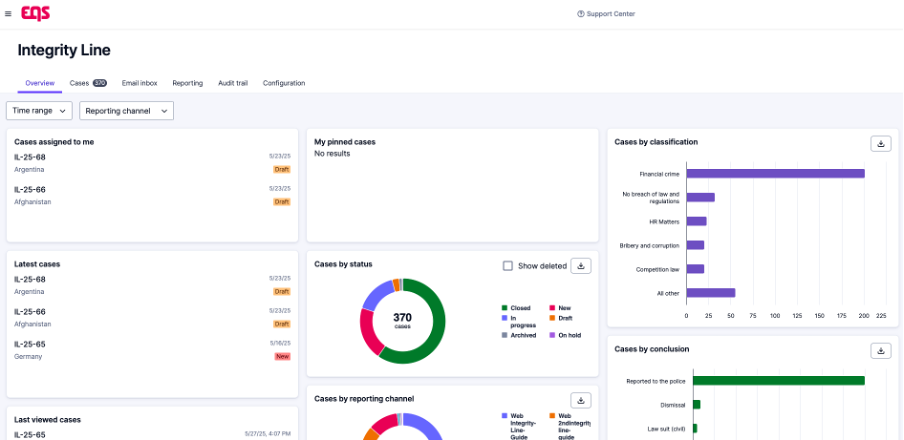 The Integrity Line platform: the consolidated case-management dashboard customers were migrated onto.
Task:
Deliver a streamlined product, consolidating features of three legacy products into the Integrity Line platform. This includes:
Identifying and closing critical feature gaps by analyzing differences and similarities across platforms.
Prioritizing the migration roadmap based on feature importance and stakeholder alignment, leveraging available data and expert validation.
Improving the product module maturity and raising team expertise and empowerment.
Successfully navigate the complexities of this high-maturity, domain-heavy product, aligning with the internal PM and establishing improved collaboration among product managers, designers, and engineers.
Action:
Facing the challenge of bringing together several acquired whistleblowing platforms into one solution, we set out to fill the gaps and evolve the product for all new and existing customers. Our approach combined understanding each platform deeply, careful discovery, and a shared vision for how case management should work in the future.
We thoroughly tested each acquired platform’s main features to find what was missing. Since we didn’t have much hard data, we then looked for user insights. We dug into existing data with experts, held workshops with various teams, and did interviews and tests with users (both customers and our own staff) to really understand what they needed.. To make sure the Integrity Line wasn’t just a merge but an improvement, we ran a design sprint with key people. This helped us imagine what future case management could look like and set a clear goal for the platform. Finally, we turned all the missing features into short, clear “one-pagers.” These documents, which included why it was important and what our solutions were, helped us get everyone on the same page and decide what to work on first for the migration plan.
Platform Check: We thoroughly tested each acquired platform’s main features to find what was missing.
User Discovery: We gathered insights by looking at data, holding workshops, and doing user interviews and testing to understand needs.
Future Plan: We ran a design sprint to imagine how case management could improve and set a clear future goal.
Action Plan: We created short summaries (one-pagers) for each missing feature to get everyone aligned and prioritize the migration work.
Result:
We gained a clear understanding of what features were missing, which was key for a smooth migration. Even with limited starting data, our data digging and checks helped us figure out which features were most important, and maybe even more importantly we found reasons to NOT implement certain functionality. This also improved how teams worked together and helped us refine our migration plan. We created a strong shared idea for the product’s future and made the Integrity Line better positioned in the market.
Overall, our way of working successfully handled tough situations, limited information, getting everyone on board, and making sure the important migration happened even under pressure.
Learnings:
Looking back, a few key lessons stood out from this engagement.
First, I learned how important subject matter expertise is, especially when data is limited. By combining that knowledge with creative problem-solving and clear one-page proposals, we were able to make complex migration topics easier to understand and act on.
Second, I saw how valuable it is to connect product vision with real customer needs and market fit. Using structured methods like design sprints helped us not only set priorities but also create a shared understanding across the team.
Third, working under pressure with a diverse team reminded me of the importance of communication, adaptability, and staying focused. These aspects were just as important as the technical challenges in reaching our migration goals.
Finally, I gained a better understanding of the balance between feature parity and configurability. For products serving large multinationals, it’s not enough to just match features—we had to carefully plan how to close gaps while keeping flexibility for different customer needs.
Altogether, these lessons shaped how I think about problem-solving, teamwork, and product strategy, and they will guide me in future projects.
Quote: “Stephan’s quick comprehension and pragmatic decision-making were instrumental in navigating the complexities of this platform migration. His ability to quickly grasp intricate details and make decisive, practical choices ensured we stayed on track and successfully prepared the platform for migration.” Lisa Koeniger, Head of Product EQS